Likha-Hinga: Design and Creation of the CS Library Wellness Space
Likha-Hinga: Design and Creation of the CS Library Wellness Space
For the past couple of years, every finals week, the College of Science Library (CSLIB) has organized wellness activities for students, separate from the CSLIB Pakain. In this semestral activity, free snacks, coffee, hot drinks, and meals are given to students as a silent tap on the back, wishing them good luck with their final exams and requirements. It started with a simple “Hell Week Reax” interactive board activity where students could pick an emoji that best represents their emotional status during the finals week, followed by a successful “Color the Stress Away” activity, providing the students a creative outlet where they can shut off their brains for a couple of minutes and be present, filling in the coloring pages with vivid colors. The following activities were then organized and conducted by the On-The-Job BLIS students as the final requirement of their internship, through which they introduced mindful breaks using logical puzzles (Calm Quest) and crafts (Create and Chill). Through these activities, we have collected feedback on what other kinds of activities the students would like to have conducted next, and their responses have been consistent. Instead of an activity, they requested a designated wellness and arts-and-crafts area where they can chill and de-stress. CSLIB heard these voices.
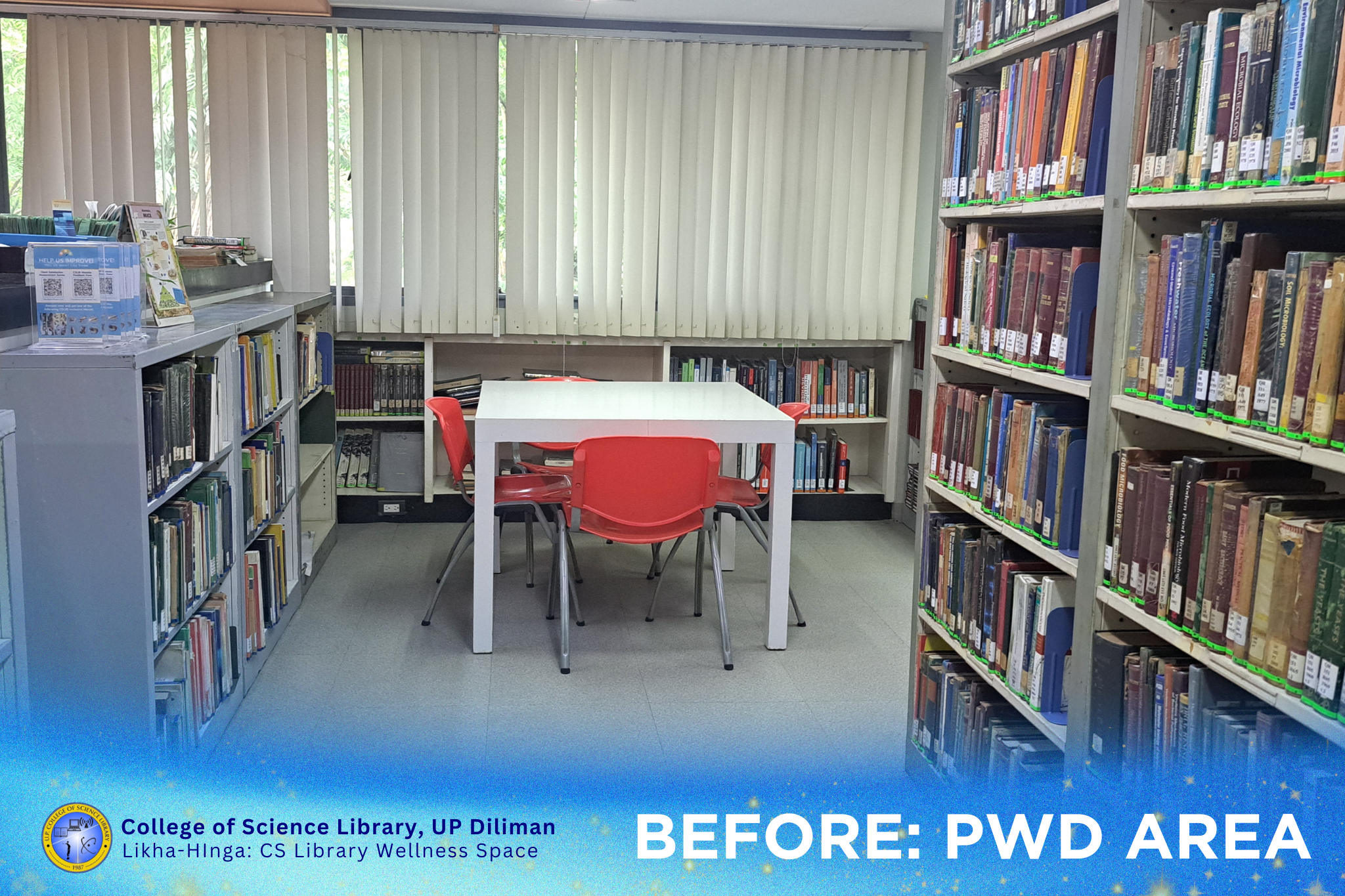
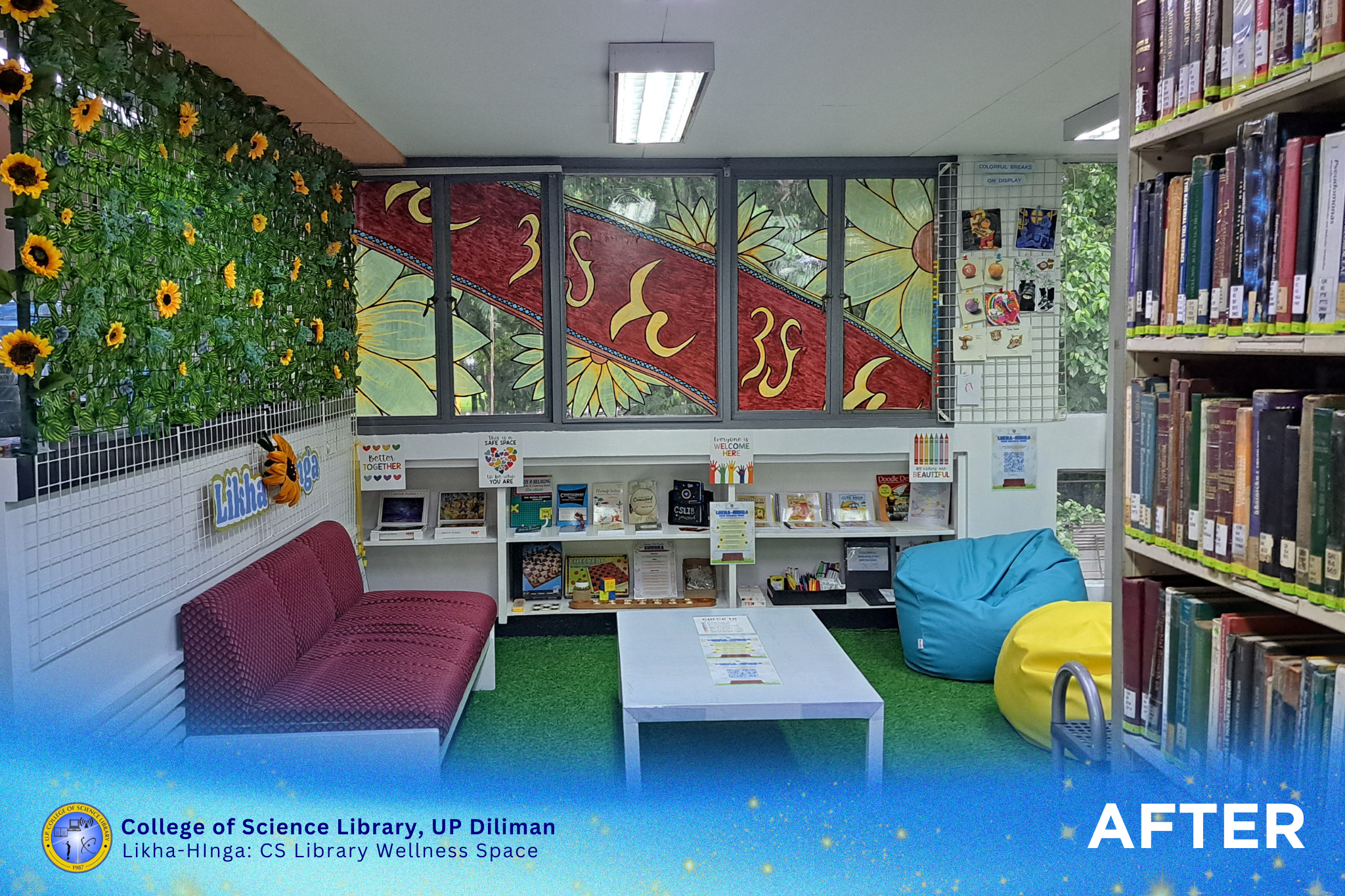
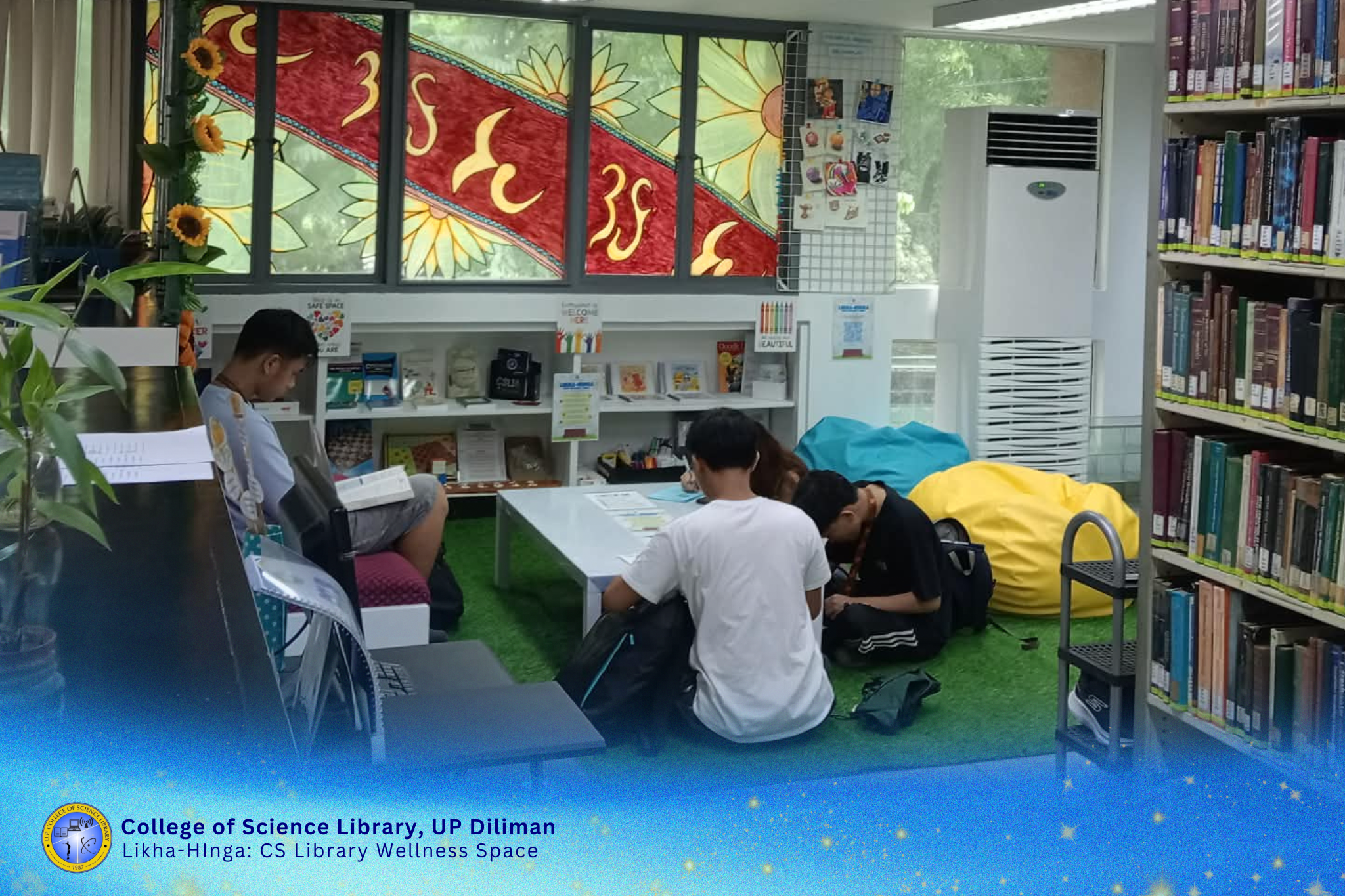
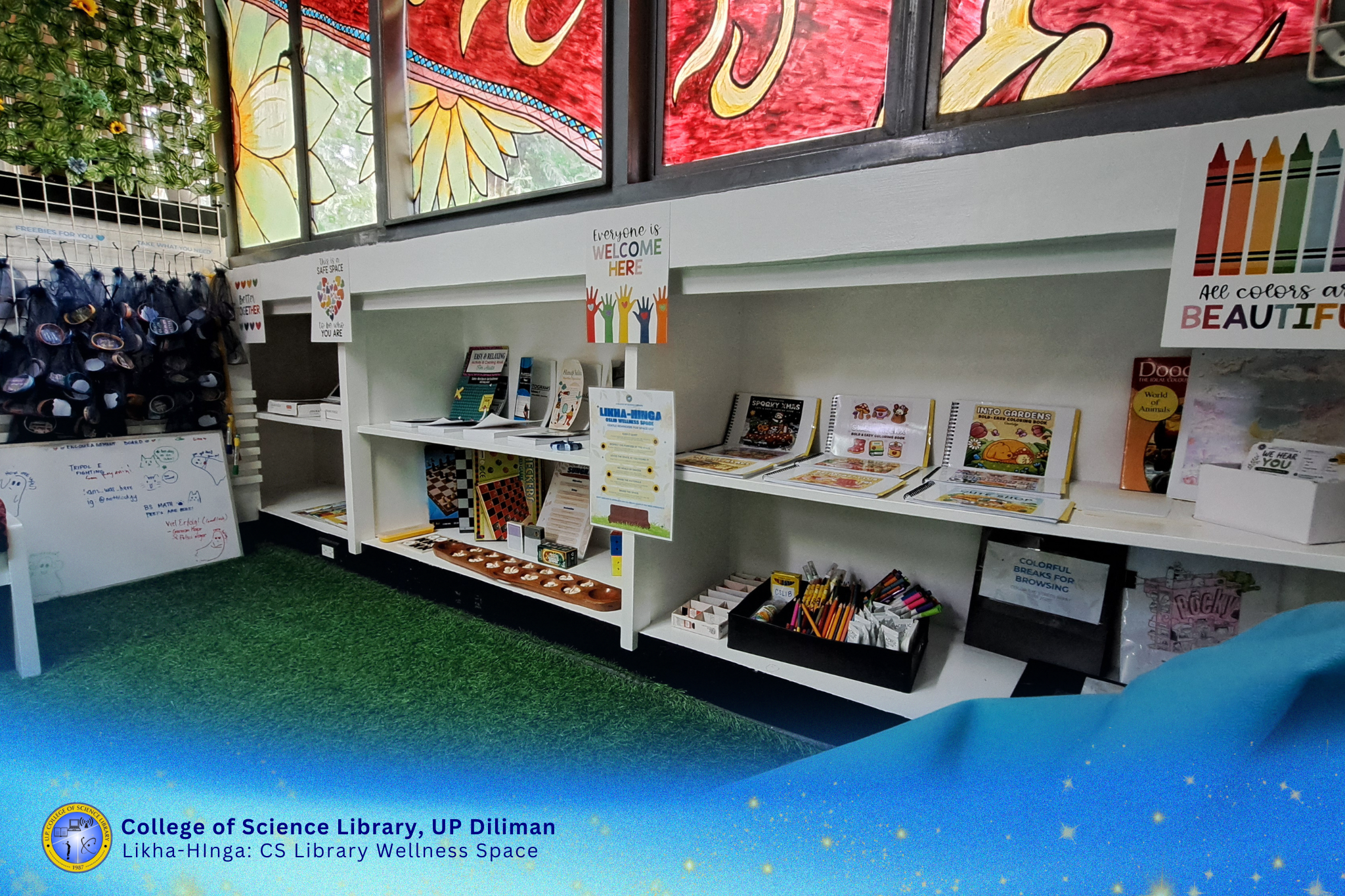
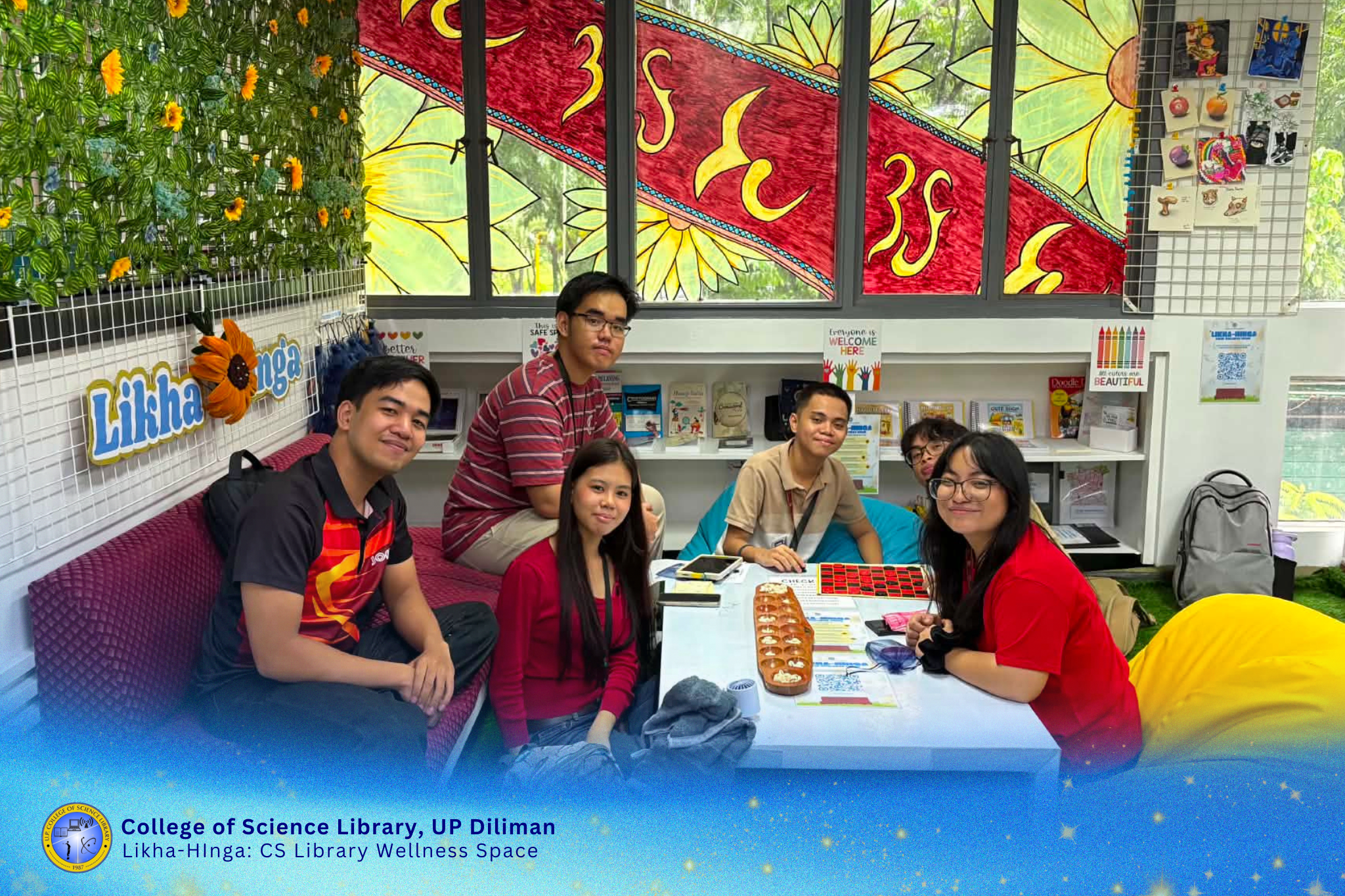
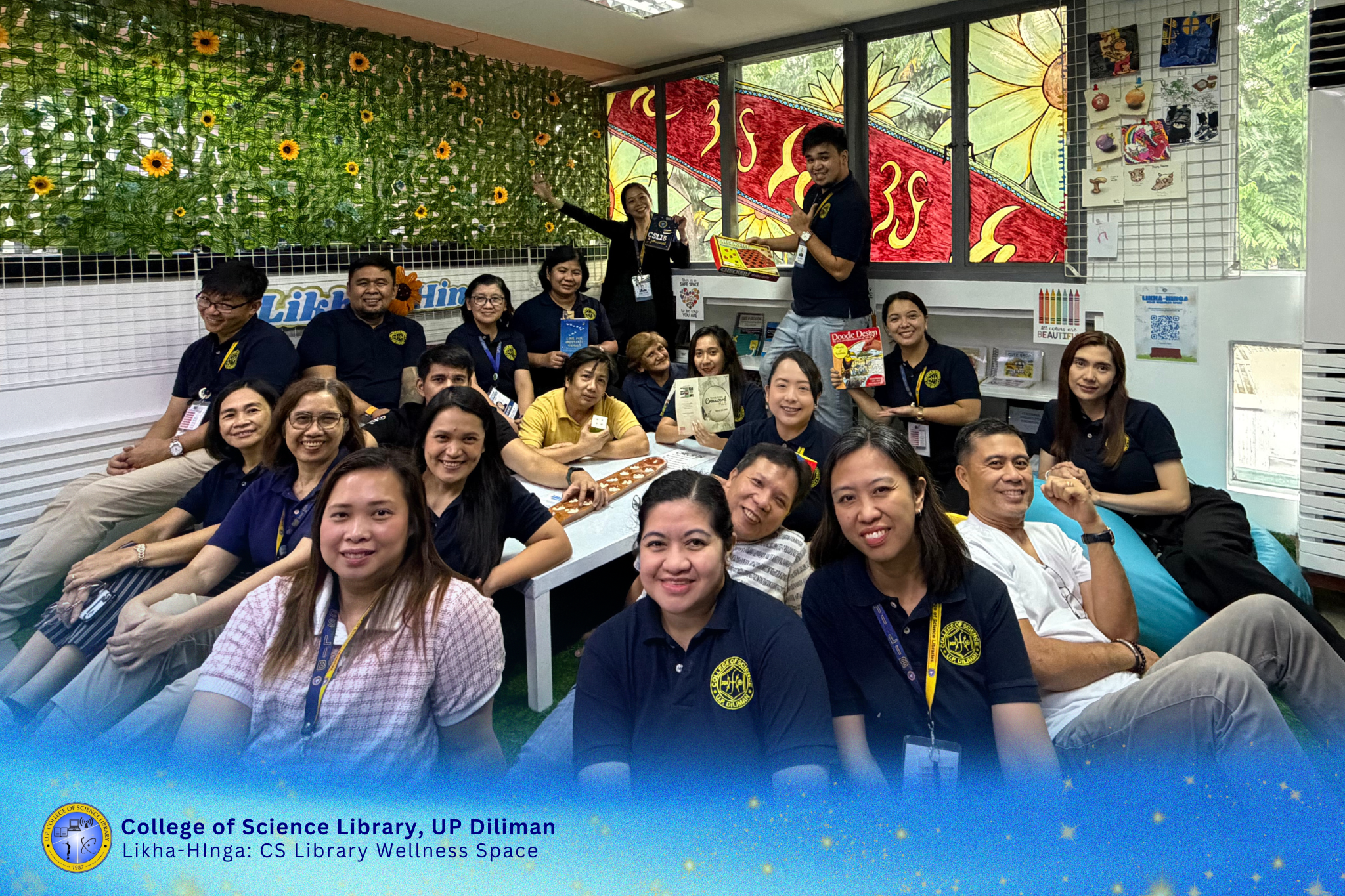
In creating a wellness space in a full library, the first challenge is finding a spot, a room, or a corner that can be redesigned with enough facilities usable for the intended purpose. The identified spot was the former PWD area by the Circulation stacks (it was relocated to a more accessible location). It has enough space for people, with built-in shelves for resources and materials, and the most vital feature of this space is the windows. What was once covered with blinds now reveals an open view of the lush green trees behind CSLIB, with a pseudo-stained-glass design inspired by U.P. symbols and imagery: the Sablay and sunflowers, prominent icons symbolizing success, honor, and excellence. Visual exposure to greenery and plant life, even when artificial, has been shown to reduce stress levels [1], which is why synthetic grass and vines, along with flowers, were installed to improve the space’s ambiance. Shelves were rearranged, and the walls and furniture were repainted to illuminate the previously grey area. Bean bags were also added to visually signal, “Don’t worry, you can relax here”.
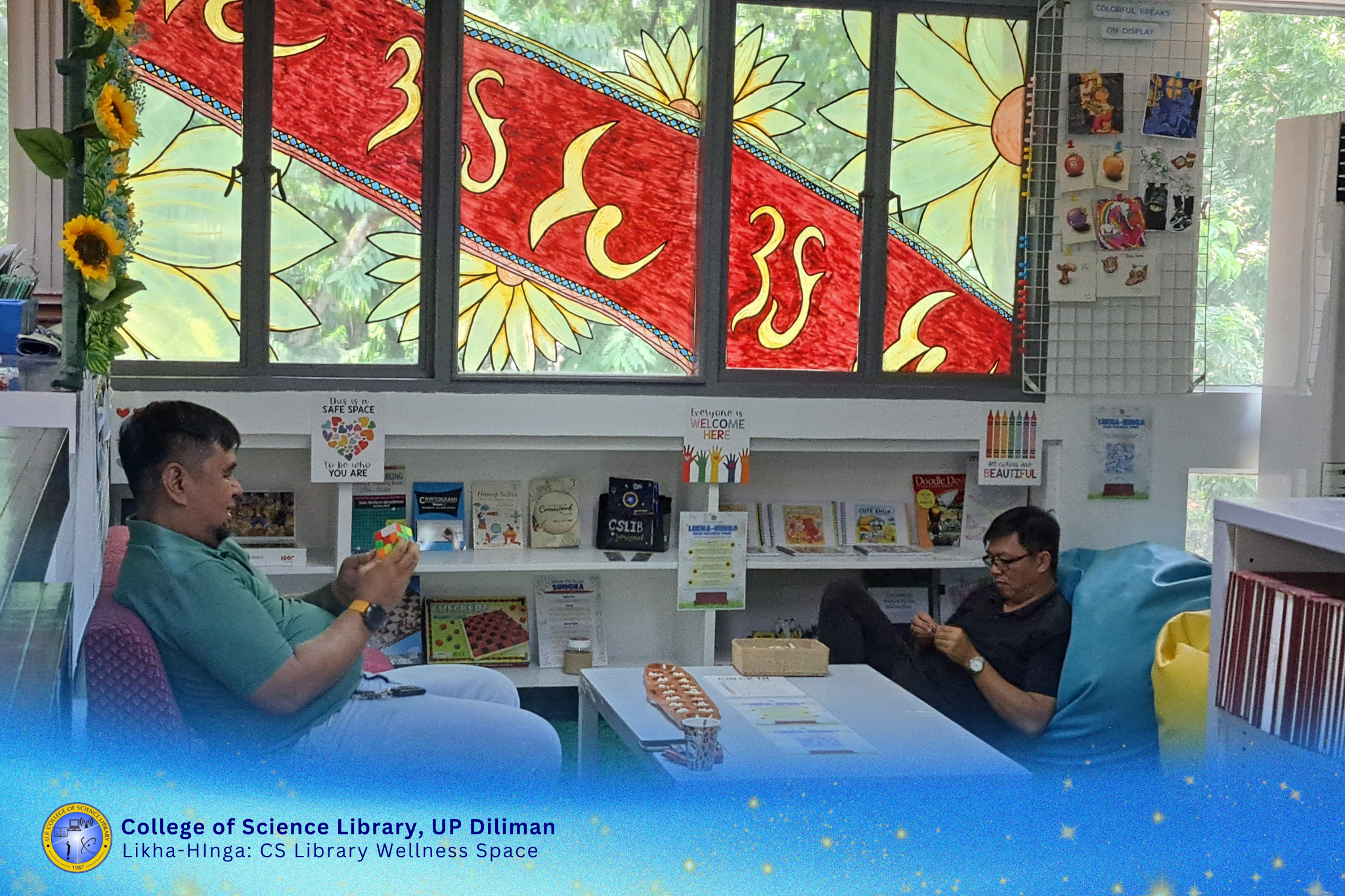
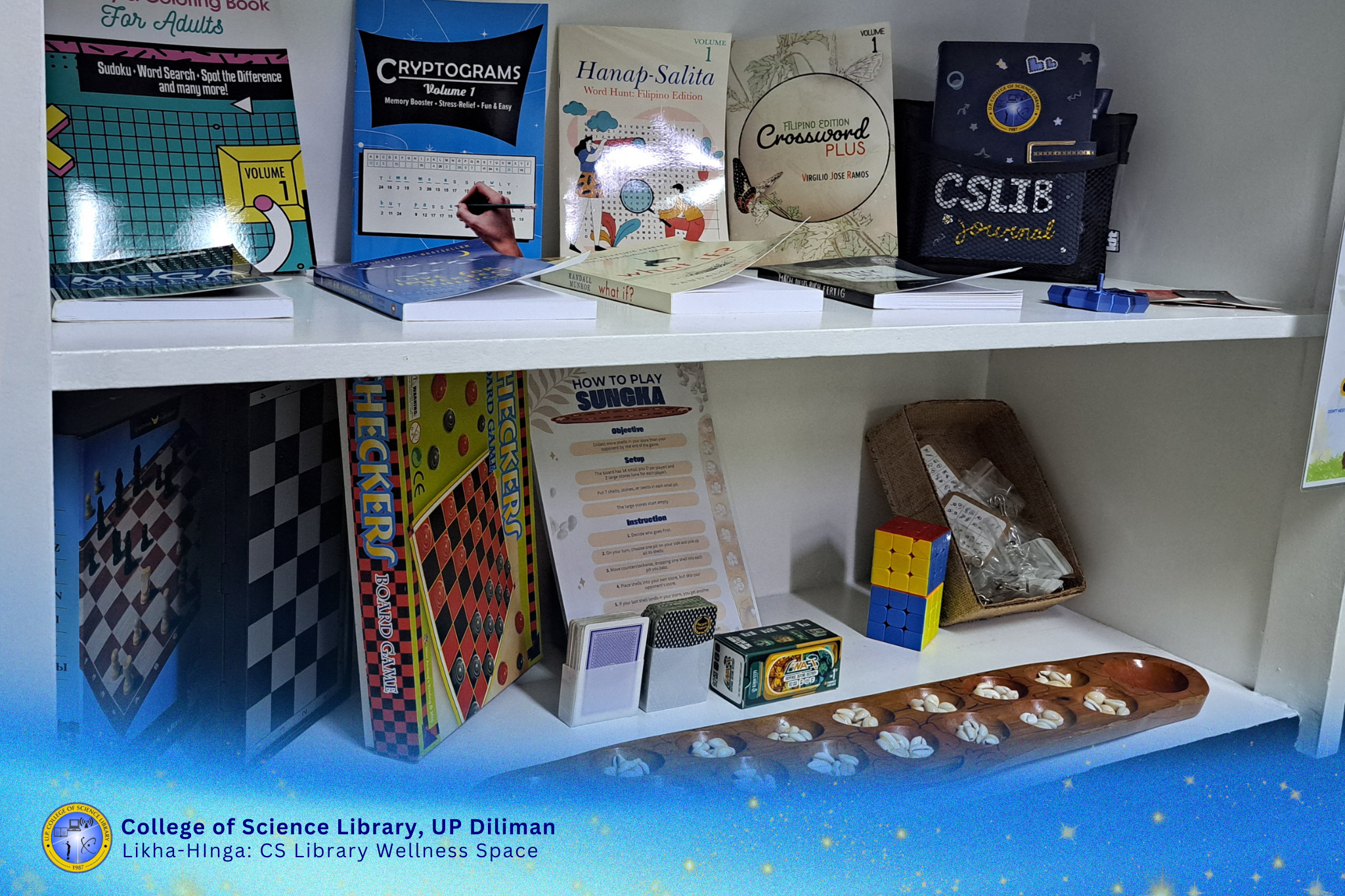
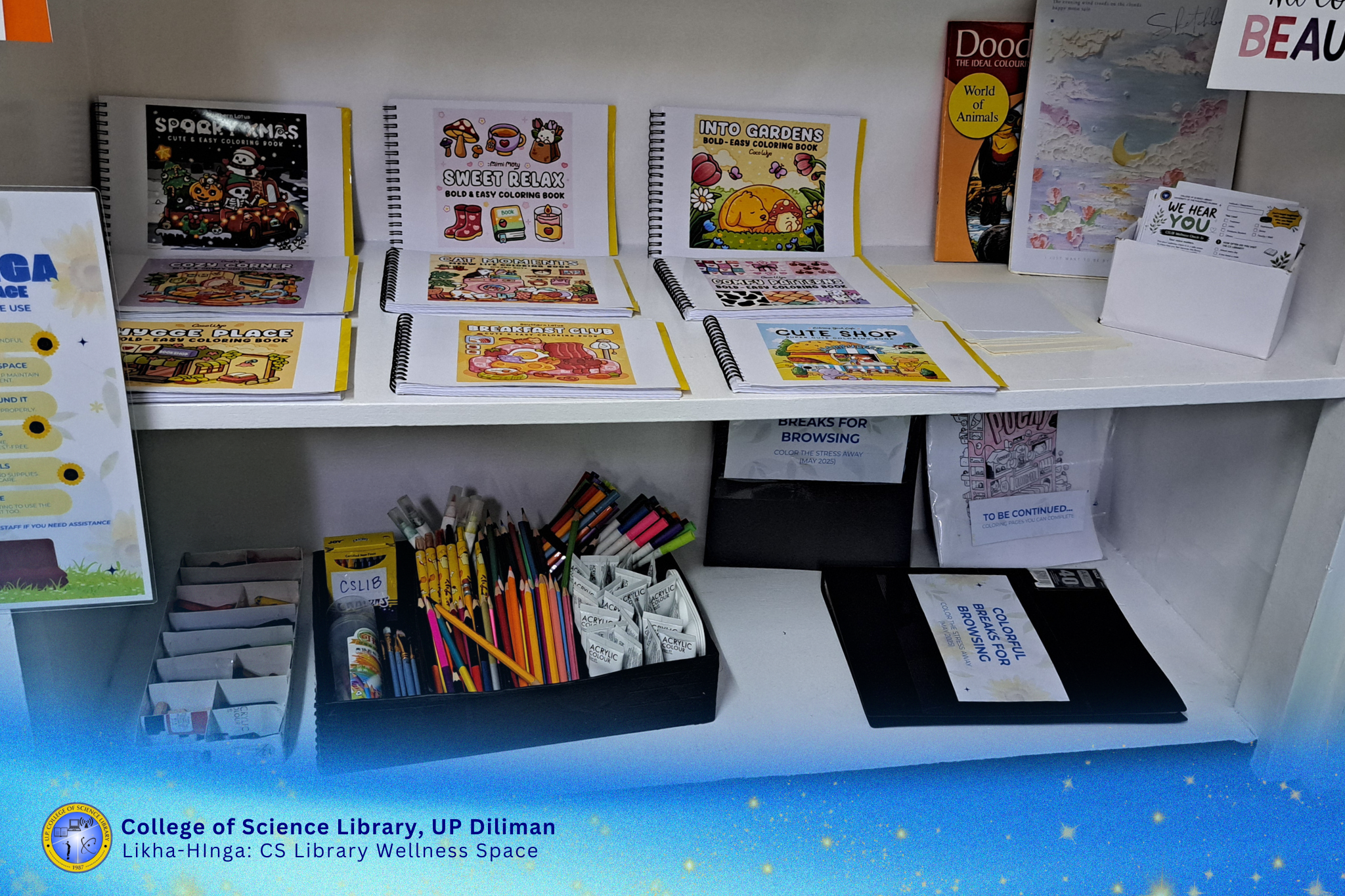
Puzzles such as jigsaw puzzles, Rubik’s cubes, and metal puzzles; board games such as chess, checkers, tic-tac-toe, pick-up sticks, and cards; activity books, leisure reading books, CSLIB journal, coloring and sketch books with coloring materials; and Sungka filled the shelves. With the addition of signage for guidelines, reminders, and feedback forms, the wellness space is almost complete. This is a space equipped with materials for crafting, creativity, and quiet expression, as well as designed for breaks, rest, and winding down; a space for creating and breathing: Likha-Hinga.
Academic libraries have increasingly been learning from the Third Place concept and transforming their spaces within academic institutions. Their functions now go beyond instruction and research support to include student well-being support. Approaches to this transformation come in multiple forms, either through internal outreach activities or through space design. In developing Likha-Hinga, the core principles of the Library Space Design Framework were applied. First, the key demographics were identified: students seeking a designated space for rest and mindfulness; the library stepped in to establish the crucial linkages needed to create a meaningful wellness environment [2]. From here on, the CS Libraries will continue designing their spaces, aiming for a more conducive, inclusive, and accessible library.
The CS Libraries take feedback from students, faculty, and researchers very seriously. This wellness space is just the first to be redesigned. You would be surprised, the next space-related announcement could be: CS Library Comfort Rooms Fixed and Improved!
Prepared by: C.A.B.
References:
[1] Jeong, J., & Park, S. (2021). Physiological and Psychological Effects of Visual Stimulation with Green Plant Types. International Journal of Environmental Research and Public Health, 18(24), 12932. https://doi.org/10.3390/ijerph182412932
[2] Flores, R. M., De Leon, S. V., & Valerio, M. G. (2021). Library Space Design Framework: A Conceptual analysis. Asia-Pacific Social Science Review, 21(2). https://doi.org/10.59588/2350-8329.1380